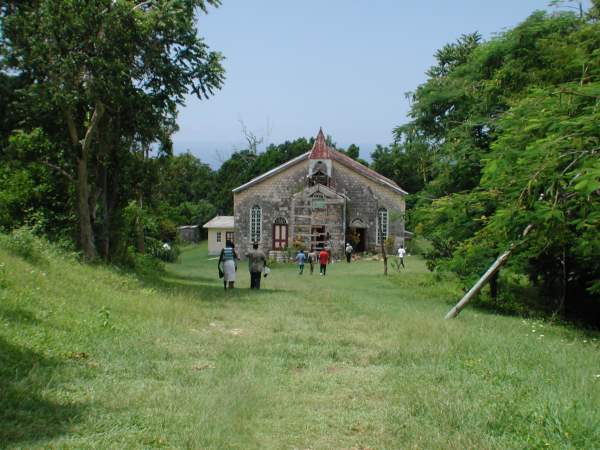
The Moravian Church in Jamaica
A community-tourism field visit preserved in the original programme archive.
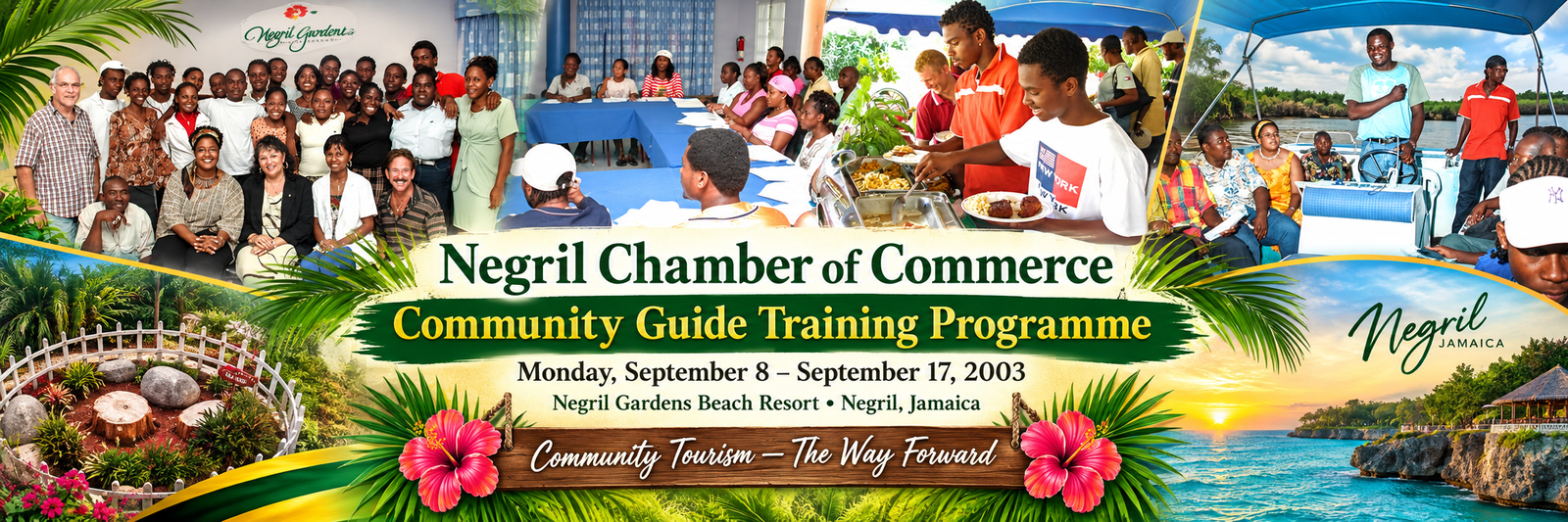
Negril Chamber of Commerce Community Guide Training Programme
September 8–17, 2003 • Historical Programme Page 2
This page preserves the themes and wording of the original 2003 training material, with light punctuation and formatting cleanup for modern reading.
In recent years, questions were being raised globally about the contribution of tourism to poverty alleviation and to local social and economic development. The training material asked a key question: How can tourism become more pro-poor?
Pro-poor tourism focuses on expanding the local economic, social, environmental and cultural benefits of tourism. The programme also noted the World Tourism Organization's 1999 Global Code of Ethics for Tourism and the need to move beyond “business as usual.”
A community-tourism field visit preserved in the original programme archive.
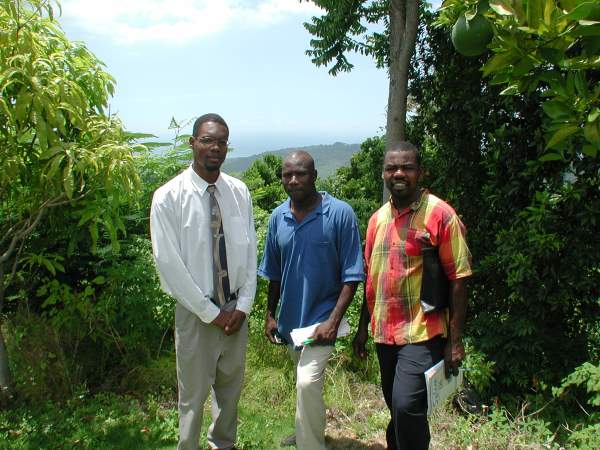
Community guides and local leadership formed part of the training experience.
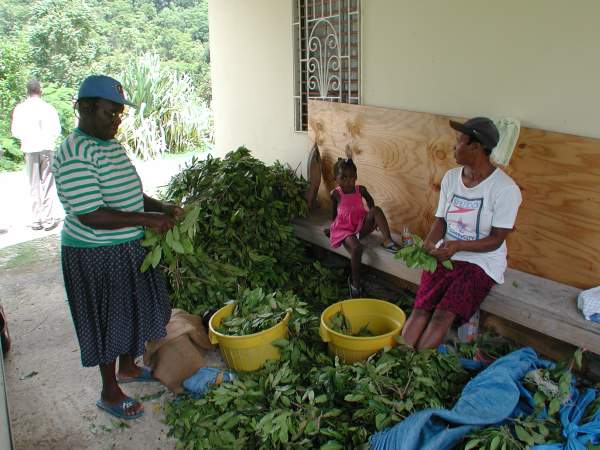
The programme emphasized local culture, livelihoods and community-based visitor experiences.
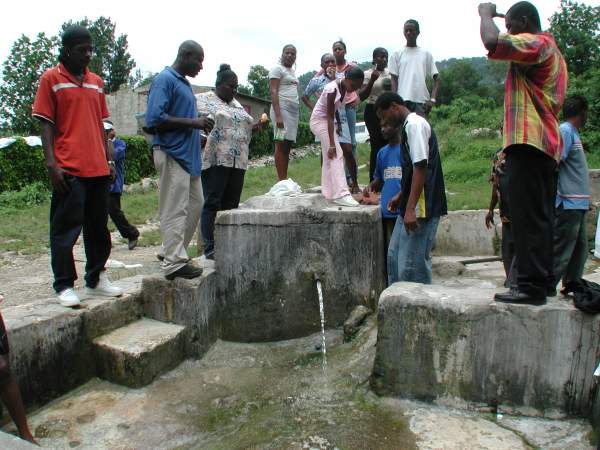
One of the communities documented during the training programme field visits.
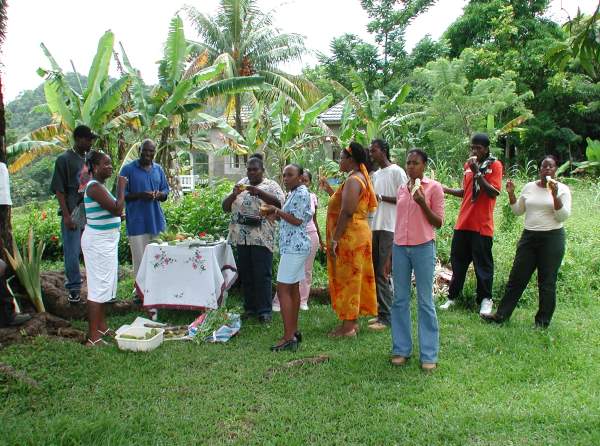
A community welcome illustrates the people-to-people focus of community tourism.
The original training material described Community Tourism as appealing to visitors and travel agents interested in quality vacations with a strong “community experience.” It emphasized environmental care, preservation of culture and heritage, hospitality, cleanliness, and relationships that could lead to repeat visits and word-of-mouth recommendations.
The Countrystyle Community Tourism Network was presented as a partnership approach to development and marketing, while the Sustainable Communities Foundation through Tourism supported community participation and regional cooperation.